
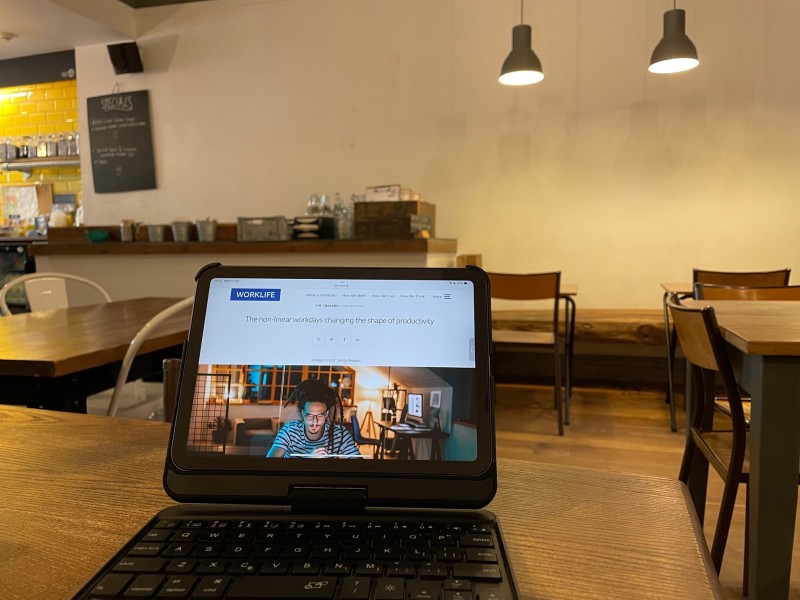
I was fired up by a post from Sharon O’Dea this morning about the shift to non-linear workdays. She shared an article from the BBC that described them in this way:
“Employees in this arrangement can do their jobs outside the traditional rigid nine-to-five block, often whenever works best for them. While working asynchronously – keeping different hours to colleagues – workers can complete tasks in flexible, focused bursts scattered throughout their day. The idea is employees can craft work schedules around their personal lives, rather than cram life into fixed, contracted hours.”
Sharon’s post emphasises the need for a true shift to asynchronous working as well as ‘unbundling’ of full-time roles.
I’d like to add to this the need for organisations to take seriously the digital wellbeing of their employees. In other words, making sure that they can live good life while using the digital workplace, with a balance of connection and disconnection, and a healthy relationship to their technology.
Like other consultants who have commented on Sharon‘s excellent post, I have worked in this ‘non-linear’ way for many years. The idea of a restrictive 9-5 schedule fills me with horror and I know would make me less productive and happy. As a freelancer I have a lot of control and autonomy about how and when and where I get my work done – these are both characteristics that research links with greater job satisfaction and lower stress at work.
I share this not as a ‘boast’ but because I think that it does contrast still with the reality for many employees inside organisations. All too often, hybrid or flexible modes of working translate to expectations (albeit implicit and, sometimes, self-imposed) of being available and working at any time, being surreptitiously (or not) monitored by managers, and ‘paying’ for the ‘privilege’ of such a work style with unspecified amounts of extra work.
Let’s be absolutely clear on this: short to medium term gains in productivity that have been reported in some industries during and since the pandemic due to digital working will likely be paid for in longer term digital burnout among employees. Across the now extensive research in this area, there’s often a felt sense of fatigue and emotional exhaustion for employees in relation to digital working.
I‘ve been deep in data collection mode for my digital wellbeing PhD over the last year and there is clear evidence coming out around issues of hyperconnectivity, digital presenteeism and digital workplace overload. Research participants acknowledge the many benefits of hybrid (etc) work styles but also some downsides in how they are currently being experienced, leading to stress and anxiety and ultimately burnout and reduced wellbeing.
But it doesn’t have to be this way.
Organisations have a terrific opportunity to foster digital wellbeing as they rethink and redesign work around non-linear work days. This includes raising awareness of both the benefits and the pitfalls of digital working; setting out reasonable policies around digital workplace use and encouraging use norms that are healthy and balanced; and making sure that leaders provide a good example of, for instance, a good balance of connection and disconnection.
There is huge potential in team digital working agreements, in which teams set out both ambitions and principles around digital working, including ways of communicating digitally, times to disconnect, reflecting on what practices are productive and healthy or otherwise. This can also help foster greater empathy and sensitivity towards different working styles and needs in the digital workplace. It can improve digital skills, encourage adoption of tools and innovative ways of using them, and protect wellbeing.
Organisations also have a lot to do around the usability and inclusiveness of the technology itself of course, and the training and support offered to employees to make the most of it. It really surprises me how little focus some organisations have on the digital dexterity of the workforce, supporting not just the technical but the so-called ‘soft’ skills of both employees and managers to be productive and thrive in the digital workplace.
What is your experience of the non-linear workday? Does your organisation take digital dexterity and digital wellbeing seriously?
This article was originally posted on LinkedIn.